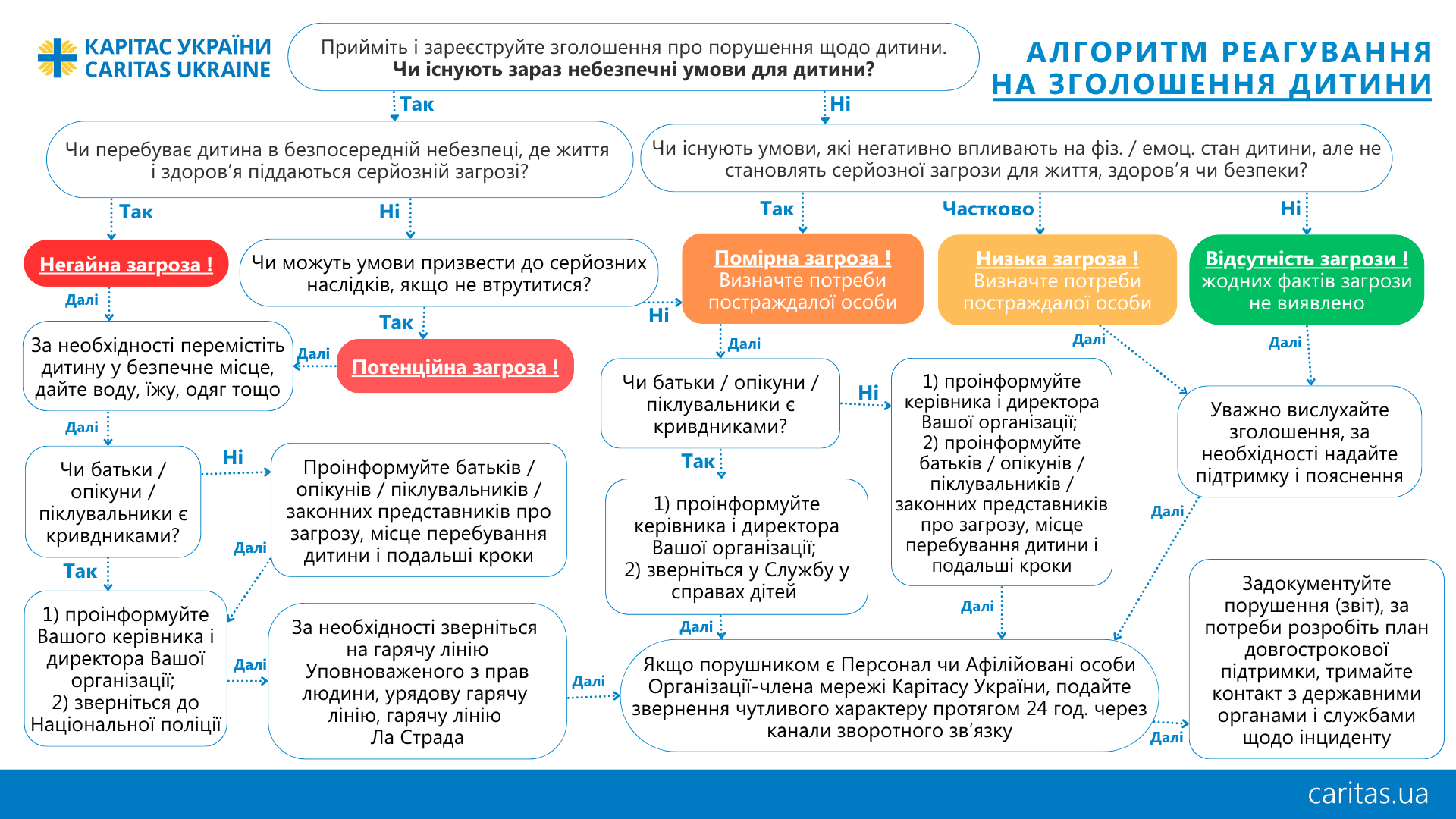
Immediate threat
This is a situation of immediate danger (for example, physical or sexual abuse that is currently occurring or has just taken place).
+ More details
+ Less
Potential threat
These are situations that can have serious consequences for a child’s health and life if left unaddressed (for example, regular physical or emotional abuse by parents).
+ More details
+ Less
Moderate threat
These are conditions that negatively affect a child’s emotional or physical well-being but do not pose an immediate or potential danger (for example, partial neglect of the child’s needs).
+ More details
+ Less
Low threat
Specific incidents or circumstances that have a negative impact on the child but do not pose a significant threat (for example, minor lapses in care).
+ More details
+ Less
None threat
There are no factors that pose a threat to the child’s life or health
(misunderstandings, misinformation, etc.).
+ More details
+ Less
Instructions for following the algorithm
This algorithm will help you determine how to respond when children report abuse.
Start the algorithm by clicking the Start Algorithm button below. Next, read each question carefully; choose the answer that most accurately describes the situation; take your time, focus on your specific case, and carefully assess all the circumstances you are dealing with. It is very important to correctly determine the level of threat: immediate, potential, moderate, low, or none.
During the test, you will be presented with questions offering the answer options Yes, No and Next.
How should you respond when a child comes forward?