

Online course
Safeguarding Course
What is this course about?
The Safeguarding Course is dedicated to learning the rules and practices that operate throughout the Caritas Ukraine network to ensure that our personnel, programs, and activities are safe and always respect the dignity and rights of all people.
Who is this course for?
The course is designed for new employees and volunteers of organizations that are part of the Caritas Ukraine network. It will also be useful for those who wish to update their knowledge of Safeguarding system policies and procedures.
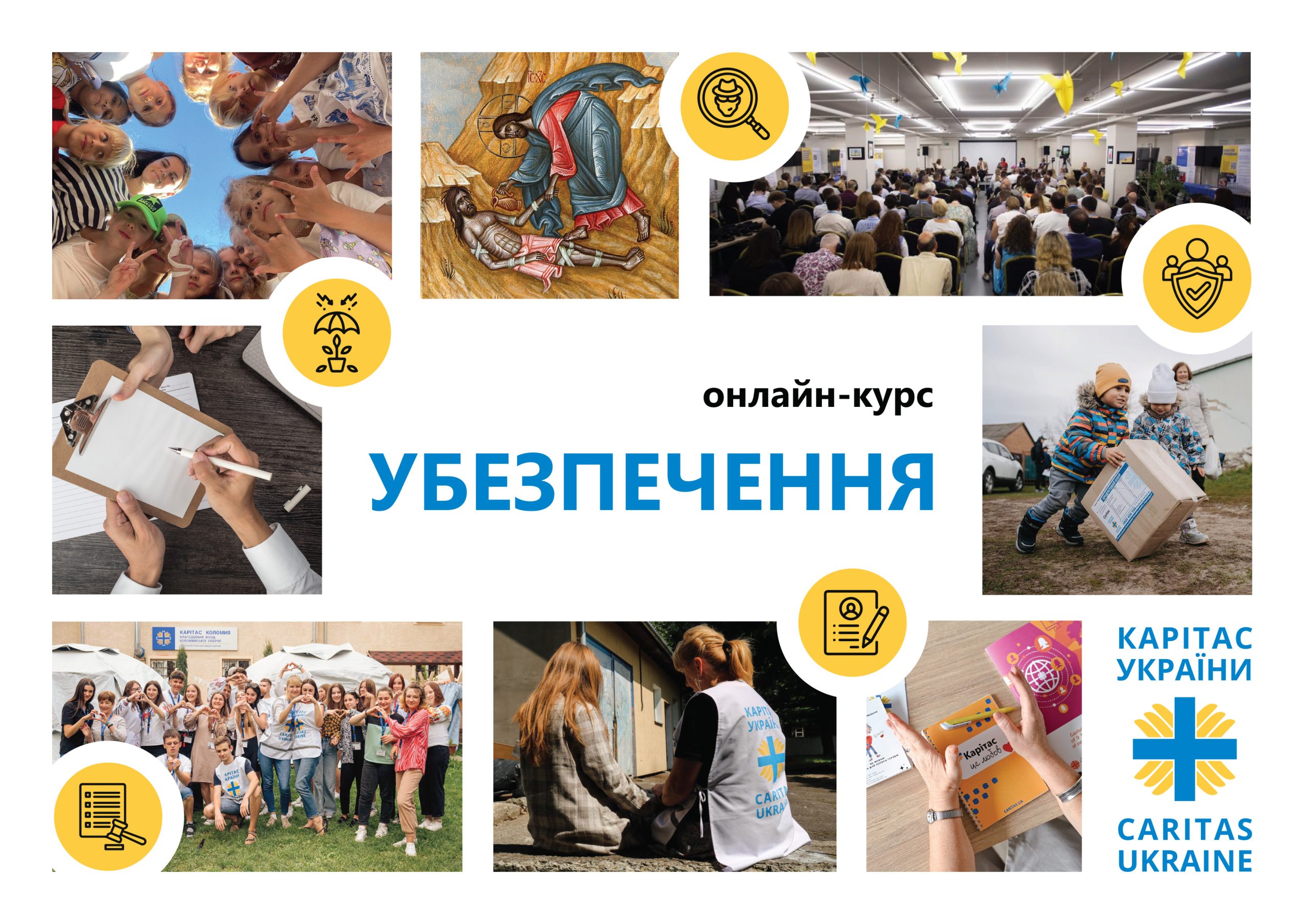
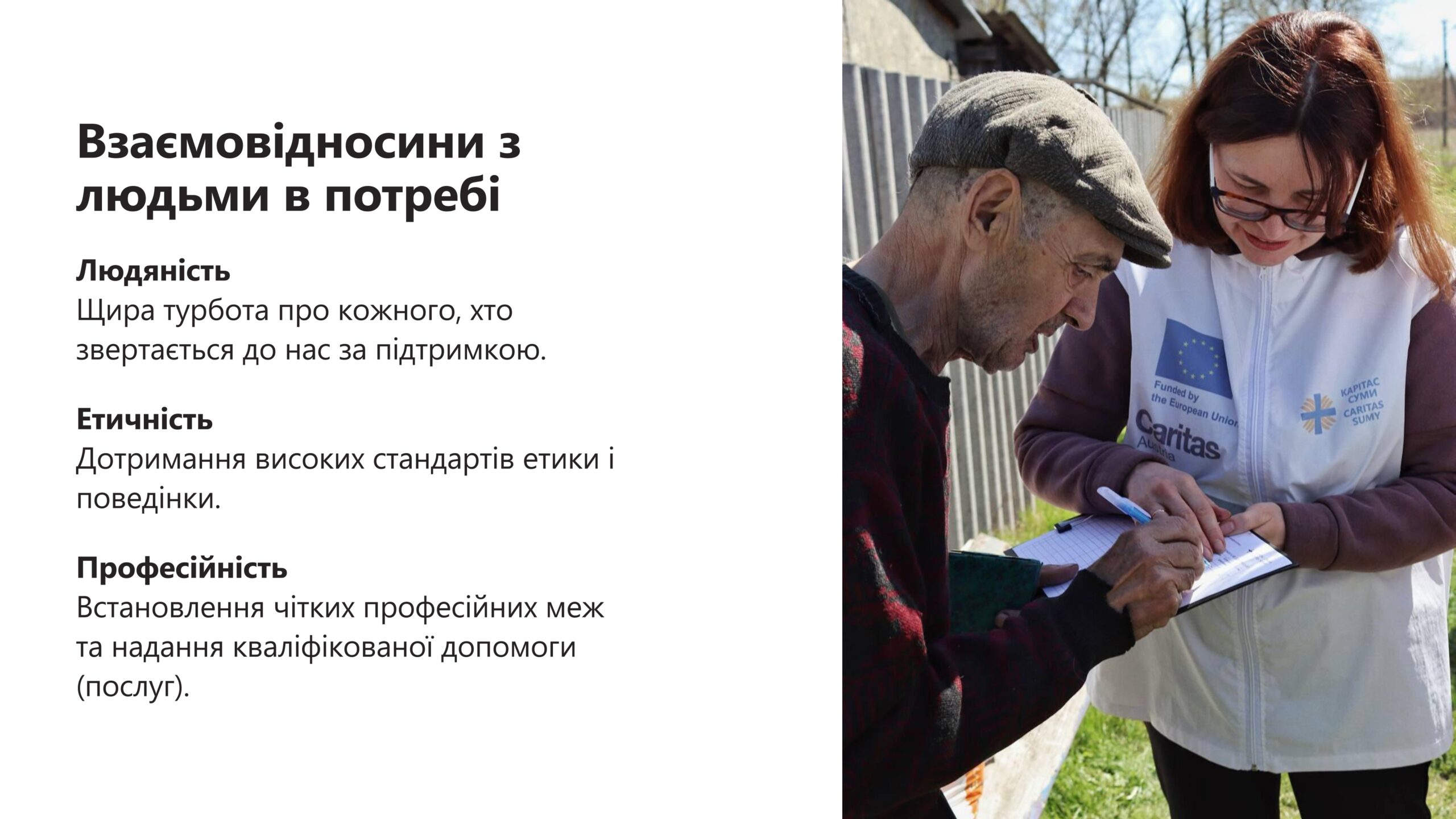

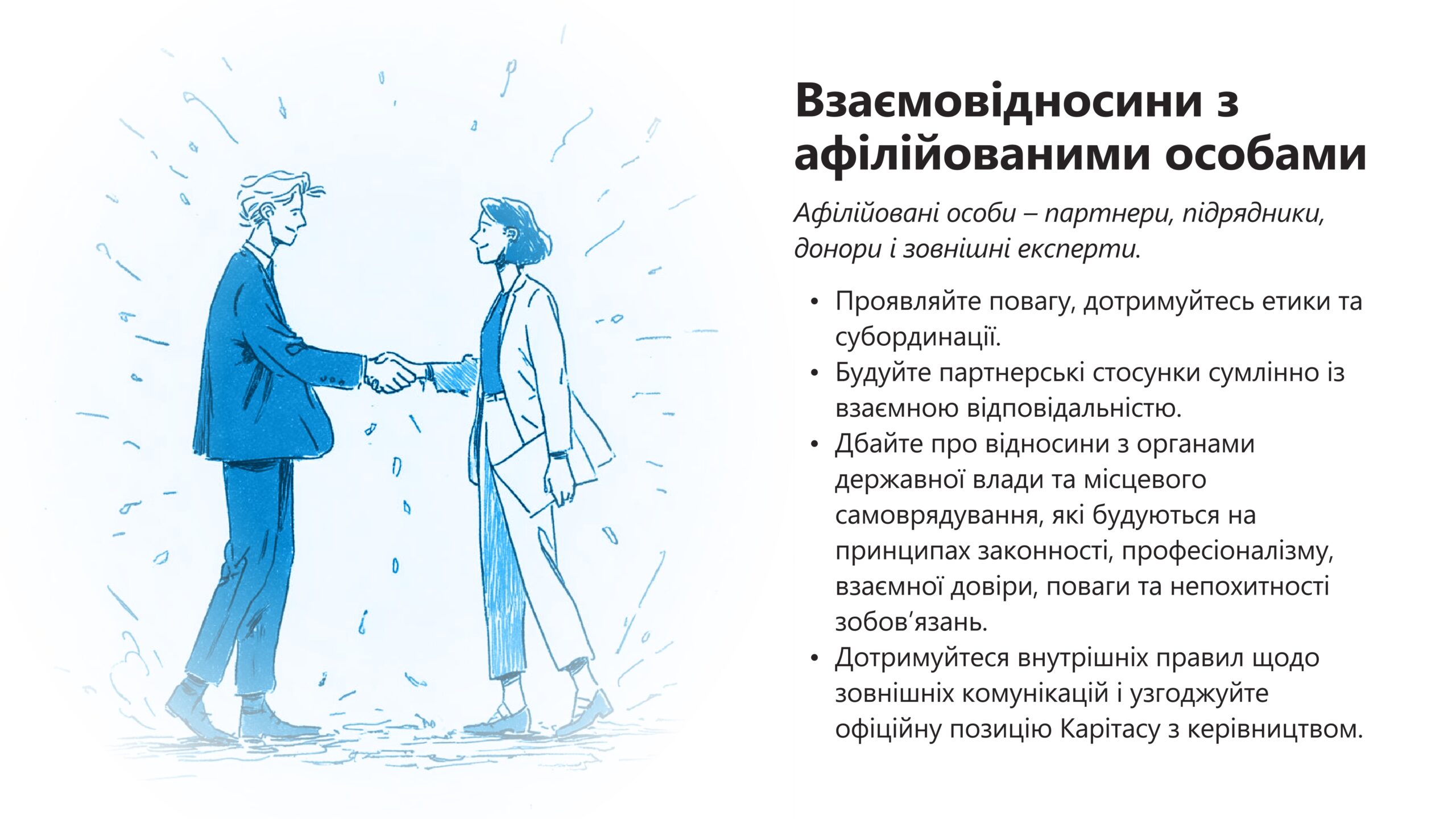
Course Program 5 modules | up to 8 hours
The course consists of an introduction, 5 thematic modules, a final test, and certificate receipt. It provides an individual learning schedule, so you can choose a convenient pace and complete the course either within 1-2 working days or over a week.
In the course, you will find:
- short videos and educational presentations;
- practical tools and useful resources;
- analysis of learning situations.
To effectively complete the training, follow the interactive elements:

The course progression is linear: access
to the next topic opens after
completing the previous one;

Complete tests to check yourself
and move on to the next module;

Receive a certificate that
confirms your achievements.
After completing the course, you will:
- learn what safeguarding is, why it’s important, and how it works within the Caritas network;
- familiarize yourself with all current policies and procedures of the Safeguarding system;
- be able to apply safeguarding principles in your daily work;
- learn to recognize signs of violations and react appropriately to them;
- receive a certificate upon successful completion of the final test.
The course completion certificate confirms successful safeguarding training and certifies the employee’s or volunteer’s readiness to work within the Caritas Ukraine network.
The course will also help you develop important professional skills:
Hard Skills:
- understanding of Safeguarding system standards and policies,
- knowledge of humanitarian standards and principles,
- risk analysis skills in project activities,
- identification of potential threats to beneficiaries,
- knowledge of algorithms for responding to violations,
- detection and resolution of conflicts of interest, etc.
Soft Skills:
- ethical responsibility,
- communication skills,
- attentiveness and sensitivity to context (age, gender, culture, vulnerabilities);
- ability to make complex decisions,
- building trust and teamwork, etc.
Disclaimer
The Safeguarding Course may contain references to difficult situations related to violations of dignity, violence, or other forms of abuse. Some topics may cause emotional discomfort. In such cases, we recommend taking a break, drinking a glass of warm water or tea, and taking care of your well-being. If necessary, contact your HR manager or psychologist.
